The challenge
Theobald Group operates one of the largest dealership networks in their region, with 31 locations representing multiple automotive brands across different market segments, from economy vehicles to premium luxury brands.
Their previous approach to digital marketing was fragmented. Each dealership was essentially running its own campaigns, often managed by different local agencies or in-house teams with varying skill levels. There was no central oversight, no shared learnings, and no strategic coordination.
This fragmentation led to serious problems:
- Inconsistent brand messaging: Each dealership portrayed the Theobald brand differently, confusing potential customers
- Internal cannibalization: Dealerships were bidding against each other on the same keywords, driving up costs while fighting for the same customers
- Inefficient budget allocation: High-performing locations were underfunded while struggling locations over-invested in poor-performing campaigns
- No cross-location insights: When one dealership discovered what worked, there was no mechanism to share that learning with others
- Duplicate audiences: The same customers were being targeted by multiple dealerships, leading to wasted spend and audience fatigue
- Reporting chaos: Leadership had no unified view of digital performance across the network
The question was: how do you maintain local relevance for 31 different dealerships while achieving the efficiency of centralized management?
Our solution
We implemented a “centralized strategy, local execution” model that captured the best of both worlds: strategic coherence with tactical flexibility.
Account architecture redesign
We restructured their entire Google Ads and paid social approach:
- Single account structure: All 31 dealerships managed in unified accounts with proper campaign segmentation
- Location-based targeting: Each campaign served the right ads to the right geographic areas
- Brand-specific campaigns: Different strategies for economy vs. premium brands
- Shared negative keywords: Preventing internal competition and wasted spend
- Cross-location remarketing: Users who engaged with one location could see relevant ads from nearby alternatives
Centralized strategy, local execution
We developed a hub-and-spoke model for their digital marketing:
- Central brand campaigns: Unified messaging and creative that built overall Theobald Group brand awareness, targeting customers before they decided on a specific location
- Local performance campaigns: Dealership-specific campaigns optimized for local inventory, seasonal promotions, and market conditions
- Smart budget allocation: Dynamic budget distribution based on real-time performance, opportunity size, and inventory levels, automatically shifting spend to where it would generate the most ROI
Platform-specific excellence
Google Ads strategy
We rebuilt their Google Ads architecture from the ground up:
- Account consolidation: Moving from 31 separate accounts to a unified structure with proper campaign segmentation
- Smart bidding at scale: Portfolio bidding strategies that optimized across all locations simultaneously
- Quality score improvements: Restructured ad groups and improved landing page alignment pushed average quality scores from 5 to 8+
- Search campaign hierarchy: Brand campaigns, model campaigns, and local campaigns each with distinct goals
- Performance Max integration: Feeding inventory data to show real vehicles across Google’s entire network
Facebook & Instagram strategy
Our paid social approach focused on:
- Dynamic vehicle ads: Real-time inventory feeds showing actual available vehicles to interested buyers; when a car sold, the ad stopped automatically
- Lookalike audiences at scale: Building lookalikes from the combined conversion data of all 31 dealerships (much more powerful than individual location data)
- Unified retargeting pools: Website visitors could be retargeted by the most relevant nearby dealership
- Creative testing framework: Testing ad creative across the network and rolling out winners everywhere
LinkedIn Ads for B2B
For their fleet and corporate sales initiatives, LinkedIn provided the perfect channel:
- Company targeting: Reaching fleet managers and procurement at target businesses
- Decision-maker outreach: Connecting with CFOs and operations leaders who approve vehicle purchases
- Lead generation forms: Capturing qualified B2B inquiries directly on LinkedIn
- ABM layering: Targeting specific companies with existing fleet agreements up for renewal
Advanced attribution & reporting
We implemented cross-channel attribution modeling that finally gave Theobald Group true visibility:
- Customer journey mapping: Understanding how customers moved from first ad impression to showroom visit
- Cross-channel attribution: Credit appropriately assigned across touchpoints (not just last-click)
- Dealership-level reporting: Each location could see their specific performance while leadership saw the aggregate
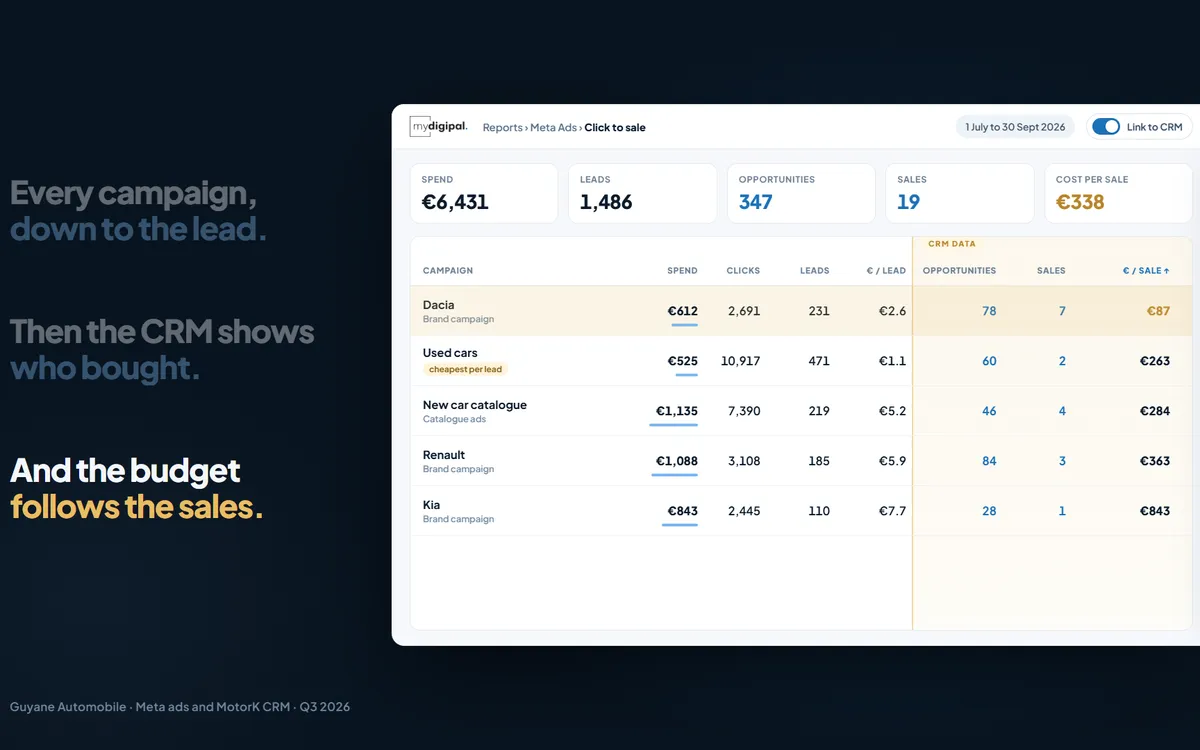
- Lead quality tracking: Connecting ad data to CRM outcomes to optimize for leads that actually buy
Automation & efficiency
We built automation systems that handled routine tasks:
- Automated bid adjustments: Real-time bid changes based on time of day, device, location, and audience
- Budget pacing: Ensuring monthly budgets were spent optimally throughout each month
- Ad scheduling: Showing the right messages at the right times
- Inventory-based activation: Campaigns automatically paused for vehicles that sold
The results
The unified approach delivered exceptional results across every metric:
- 112% increase in Google Ads conversions through better structure, bidding, and quality scores
- 125% increase in Facebook conversions with dynamic creative and unified audience strategies
- 50% reduction in cost per conversion across all channels: the efficiency gains were massive
- 63% growth in website traffic from improved campaign performance and reduced internal competition
- 35% improvement in LinkedIn conversion rate for B2B fleet initiatives
- 90% reduction in management time compared to the previous fragmented approach
- Unified reporting giving leadership clear visibility into network-wide performance
The efficiency gains
Perhaps most importantly, the centralized approach freed up significant time and resources:
- For the marketing team: Instead of managing 31 separate efforts with different agencies and tools, they could focus on strategy and optimization
- For dealership managers: Local leaders got clear, actionable reports without needing to understand digital marketing complexity
- For leadership: Real-time dashboards showed network-wide performance with drill-down to individual locations
- For budget: Savings from eliminated redundancy were reinvested into high-performing campaigns
The automation we built handled the routine work (bid adjustments, budget pacing, creative rotation) while humans focused on strategic decisions.
Key insights
Three lessons emerged from this engagement:
-
Scale creates data advantages: With 31 locations feeding data into unified campaigns, our machine learning algorithms learned faster and performed better than any individual dealership could achieve alone
-
Centralization doesn’t mean rigidity: Local dealerships still had unique campaigns for local promotions, inventory, and market conditions; they just benefited from shared infrastructure and learnings
-
Efficiency enables investment: The cost savings from eliminating redundancy and improving performance weren’t just pocketed; they were reinvested into growth initiatives that expanded the network’s digital presence
Scale doesn’t have to mean complexity. With the right strategy and systems, managing digital marketing for multiple locations becomes more efficient than managing a single one, with each location benefiting from learnings across the entire network.
Ready to unify your multi-location digital marketing? Explore our Google Ads services and paid social advertising, or get a free quote to discuss your strategy.