Le défi
Le Groupe Théobald exploite l’un des plus grands réseaux de concessions de sa région, avec 31 sites représentant plusieurs marques automobiles sur différents segments de marché, des véhicules économiques aux marques de luxe premium.
Leur approche précédente du marketing digital était fragmentée. Chaque concession gérait essentiellement ses propres campagnes, souvent par différentes agences locales ou équipes internes avec des niveaux de compétences variables. Il n’y avait pas de supervision centrale, pas de partage des apprentissages et pas de coordination stratégique.
Cette fragmentation a conduit à des problèmes sérieux :
- Messages de Marque Incohérents : Chaque concession présentait la marque Théobald différemment, semant la confusion chez les clients potentiels
- Cannibalisation Interne : Les concessions enchérissaient les unes contre les autres sur les mêmes mots-clés, faisant monter les coûts tout en se disputant les mêmes clients
- Allocation Budgétaire Inefficace : Les sites performants étaient sous-financés tandis que les sites en difficulté surinvestissaient dans des campagnes peu performantes
- Pas d’Insights Cross-Sites : Quand une concession découvrait ce qui fonctionnait, il n’y avait aucun mécanisme pour partager cet apprentissage avec les autres
- Audiences Dupliquées : Les mêmes clients étaient ciblés par plusieurs concessions, générant du gaspillage et de la fatigue publicitaire
- Chaos du Reporting : La direction n’avait aucune vue unifiée de la performance digitale sur le réseau
La question était : comment maintenir la pertinence locale pour 31 concessions différentes tout en atteignant l’efficacité d’une gestion centralisée ?
Notre solution
Nous avons implémenté un modèle “stratégie centralisée, exécution locale” qui capturait le meilleur des deux mondes : cohérence stratégique avec flexibilité tactique.
Restructuration de l’architecture de comptes
Nous avons restructuré leur approche Google Ads et social ads :
- Structure de Compte Unique : Les 31 concessions gérées dans des comptes unifiés avec une segmentation de campagnes appropriée
- Ciblage Basé sur la Localisation : Chaque campagne diffusait les bonnes annonces aux bonnes zones géographiques
- Campagnes Spécifiques par Marque : Stratégies différentes pour les marques économiques vs premium
- Mots-Clés Négatifs Partagés : Prévention de la concurrence interne et du gaspillage
- Remarketing Cross-Sites : Les utilisateurs qui s’engageaient avec un site pouvaient voir des annonces pertinentes des alternatives à proximité
Stratégie centralisée, exécution locale
Nous avons développé un modèle hub-and-spoke pour leur marketing digital :
- Campagnes de Marque Centrales : Messages et créatifs unifiés qui construisaient la notoriété globale du Groupe Théobald, ciblant les clients avant qu’ils ne décident d’un site spécifique
- Campagnes Performance Locales : Campagnes spécifiques à chaque concession optimisées pour l’inventaire local, les promotions saisonnières et les conditions du marché
- Allocation Budgétaire Intelligente : Distribution dynamique du budget basée sur la performance en temps réel, la taille de l’opportunité et les niveaux d’inventaire, déplaçant automatiquement le budget là où il générerait le plus de ROI
Excellence par plateforme
Stratégie Google Ads
Nous avons reconstruit leur architecture Google Ads de zéro :
- Consolidation des Comptes : Passage de 31 comptes séparés à une structure unifiée avec une segmentation de campagnes appropriée
- Smart Bidding à l’Échelle : Stratégies d’enchères portfolio qui optimisaient sur tous les sites simultanément
- Améliorations du Quality Score : Restructuration des groupes d’annonces et amélioration de l’alignement des pages de destination ont poussé les quality scores moyens de 5 à 8+
- Hiérarchie des Campagnes Search : Campagnes de marque, campagnes modèles et campagnes locales avec chacune des objectifs distincts
- Intégration Performance Max : Alimentation des données d’inventaire pour montrer de vrais véhicules sur tout le réseau Google
Stratégie Facebook & Instagram
Notre approche social ads s’est concentrée sur :
- Annonces Véhicules Dynamiques : Flux d’inventaire en temps réel montrant les véhicules réellement disponibles aux acheteurs intéressés ; quand une voiture était vendue, l’annonce s’arrêtait automatiquement
- Audiences Similaires à l’Échelle : Construction de lookalikes à partir des données de conversion combinées des 31 concessions (bien plus puissant que les données de sites individuels)
- Pools de Retargeting Unifiés : Les visiteurs du site pouvaient être retargetés par la concession la plus pertinente à proximité
- Framework de Test Créatif : Test des créatifs publicitaires sur le réseau et déploiement des gagnants partout
LinkedIn Ads pour le B2B
Pour leurs initiatives de ventes flottes et entreprises, LinkedIn a fourni le canal parfait :
- Ciblage d’Entreprises : Atteindre les gestionnaires de flottes et les acheteurs dans les entreprises cibles
- Outreach Décideurs : Connexion avec les DAF et directeurs des opérations qui approuvent les achats de véhicules
- Formulaires de Génération de Leads : Capture d’enquêtes B2B qualifiées directement sur LinkedIn
- Layering ABM : Ciblage d’entreprises spécifiques avec des contrats de flotte existants en cours de renouvellement
Attribution avancée & reporting
Nous avons implémenté une modélisation d’attribution cross-canal qui a enfin donné au Groupe Théobald une vraie visibilité :
- Cartographie du Parcours Client : Compréhension de comment les clients passaient de la première impression publicitaire à la visite en concession
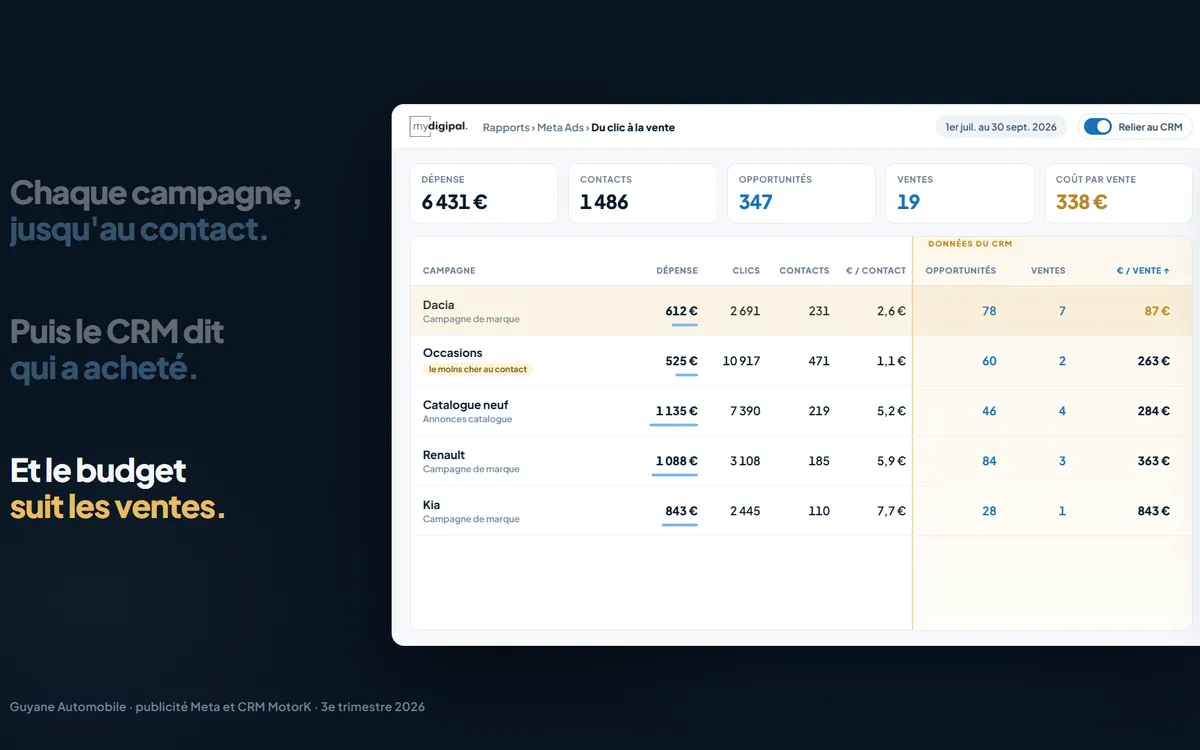
- Attribution Cross-Canal : Crédit approprié attribué à travers les points de contact (pas juste le dernier clic)
- Reporting par Concession : Chaque site pouvait voir sa performance spécifique tandis que la direction voyait l’agrégat
- Suivi de la Qualité des Leads : Connexion des données publicitaires aux résultats CRM pour optimiser sur les leads qui achètent vraiment
Automatisation & efficacité
Nous avons construit des systèmes d’automatisation qui géraient les tâches de routine :
- Ajustements d’Enchères Automatisés : Changements d’enchères en temps réel basés sur l’heure, l’appareil, la localisation et l’audience
- Pacing Budgétaire : S’assurer que les budgets mensuels étaient dépensés de façon optimale tout au long du mois
- Programmation des Annonces : Montrer les bons messages aux bons moments
- Activation Basée sur l’Inventaire : Campagnes automatiquement mises en pause pour les véhicules vendus
Les résultats
L’approche unifiée a livré des résultats exceptionnels sur chaque métrique :
- Augmentation de 112% des conversions Google Ads grâce à une meilleure structure, enchères et quality scores
- Augmentation de 125% des conversions Facebook avec des créatifs dynamiques et des stratégies d’audience unifiées
- Réduction de 50% du coût par conversion sur tous les canaux, les gains d’efficacité ont été massifs
- Croissance de 63% du trafic site web grâce à l’amélioration de la performance des campagnes et à la réduction de la concurrence interne
- Amélioration de 35% du taux de conversion LinkedIn pour les initiatives flottes B2B
- Réduction de 90% du temps de gestion comparé à l’approche fragmentée précédente
- Reporting unifié donnant à la direction une visibilité claire sur la performance du réseau
Les gains d’efficacité
Le plus important peut-être, l’approche centralisée a libéré du temps et des ressources significatifs :
- Pour l’Équipe Marketing : Au lieu de gérer 31 efforts séparés avec différentes agences et outils, ils pouvaient se concentrer sur la stratégie et l’optimisation
- Pour les Directeurs de Concession : Les responsables locaux obtenaient des rapports clairs et actionnables sans avoir besoin de comprendre la complexité du marketing digital
- Pour la Direction : Des dashboards temps réel montraient la performance du réseau avec drill-down vers les sites individuels
- Pour le Budget : Les économies de la redondance éliminée étaient réinvesties dans les campagnes performantes
L’automatisation que nous avons construite gérait le travail de routine (ajustements d’enchères, pacing budgétaire, rotation créative), tandis que les humains se concentraient sur les décisions stratégiques.
Insights clés
Trois leçons ont émergé de cet engagement :
-
L’échelle crée des avantages data : Avec 31 sites alimentant des campagnes unifiées, nos algorithmes de machine learning apprenaient plus vite et performaient mieux que n’importe quelle concession individuelle ne pourrait atteindre seule
-
La centralisation ne signifie pas rigidité : Les concessions locales avaient toujours des campagnes uniques pour les promotions locales, l’inventaire et les conditions du marché, elles bénéficiaient juste d’une infrastructure et d’apprentissages partagés
-
L’efficacité permet l’investissement : Les économies de l’élimination de la redondance et de l’amélioration de la performance n’ont pas été simplement empochées, elles ont été réinvesties dans des initiatives de croissance qui ont étendu la présence digitale du réseau
L’échelle n’a pas à signifier complexité. Avec la bonne stratégie et les bons systèmes, gérer le marketing digital pour plusieurs sites devient plus efficace que d’en gérer un seul, chaque site bénéficiant des apprentissages de tout le réseau.
Prêt à unifier le marketing digital de vos multiples sites ? Découvrez nos services Google Ads et publicité social ads, ou obtenez un devis gratuit pour discuter de votre stratégie.