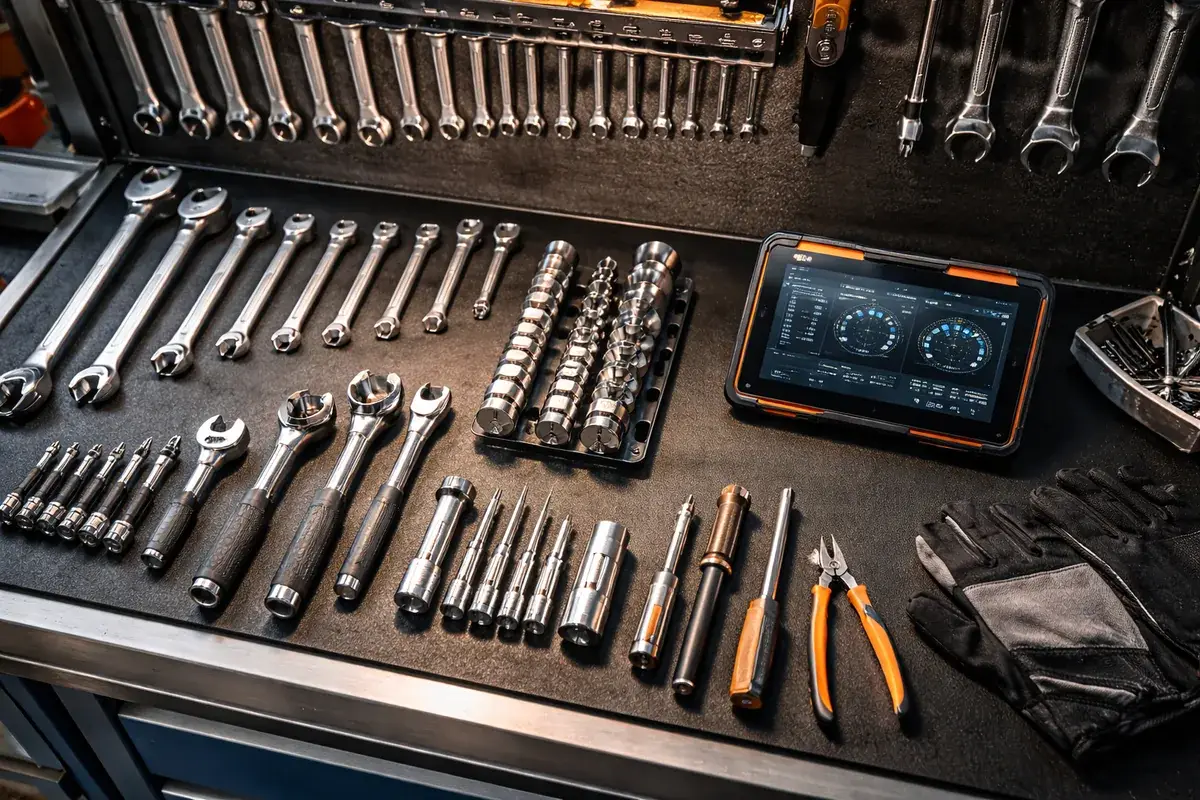
The retail media revolution comes to automotive
Retail media networks have become the fastest-growing advertising channel in digital marketing, with spending projected to exceed 50 billion globally by 2026. While Amazon, Walmart, and other consumer retail giants have led this revolution, the automotive aftermarket represents a largely untapped opportunity.
Automotive dealerships and parts distributors sit on a goldmine of high-intent traffic. Customers visiting dealership websites and parts catalogs are actively in-market for purchases. Yet most automotive businesses monetize this traffic through vehicle and parts sales alone, leaving significant advertising revenue uncaptured.
Retail media networks (RMNs) allow automotive businesses to sell advertising placements to suppliers, brands, and complementary service providers, turning existing digital traffic into a new revenue stream while simultaneously improving customer experience through relevant product recommendations.
Understanding the Automotive Retail Media Opportunity
Why Automotive Traffic Is Uniquely Valuable
Automotive dealership and parts website visitors represent some of the highest-value audiences in digital advertising:
- Average order value for automotive parts purchases: EUR 85-340
- Purchase intent: 78% of parts website visitors are ready to buy within 48 hours
- Brand loyalty: Automotive customers show 3.2x higher repeat purchase rates when presented with relevant brands
- Data richness: Vehicle ownership data, maintenance history, and purchase patterns enable precise targeting
The Revenue Potential
| Dealership Size | Monthly Web Traffic | Estimated Annual RMN Revenue |
|---|---|---|
| Small (single location) | 15,000-30,000 visits | EUR 45,000-90,000 |
| Medium (3-5 locations) | 50,000-150,000 visits | EUR 180,000-540,000 |
| Large (10+ locations) | 300,000-1M+ visits | EUR 900,000-3M+ |
| Parts distributor | 500,000-5M visits | EUR 1.5M-15M+ |
These projections are based on industry-standard CPM rates of EUR 15-35 for automotive audiences, which is premium pricing justified by the high purchase intent and specific targeting capabilities.
Building Your Automotive Retail Media Network
Step 1: Audit Your Digital Traffic Assets
Before launching an RMN, understand the value of what you already have. Use your tracking and reporting infrastructure to analyze:
- Traffic volume and trends across your digital properties
- Audience composition: Vehicle owners by make, model, year, and maintenance stage
- High-value page categories: Parts catalogs, service scheduling, vehicle configurators
- Engagement metrics: Time on site, pages per session, return visit frequency
- Purchase funnel data: Browse-to-purchase conversion rates by category
Step 2: Define Your Ad Inventory
Identify where advertising placements can be integrated without disrupting the customer experience:
Sponsored product listings: Highlight specific brands within parts search results (highest revenue potential)
Display banners: Strategic placements on high-traffic pages like service scheduling and vehicle detail pages
Email sponsorships: Include sponsored content in service reminder and promotional emails
Recommendation widgets: AI-powered product suggestions that blend advertising with genuine utility
Video pre-roll: Short brand videos before service tutorial or vehicle walkthrough content
Step 3: Develop Your Data Proposition
The real value of an automotive RMN lies in its first-party data. Develop targeting capabilities that advertisers cannot access elsewhere:
- Vehicle-specific targeting: Reach owners of specific makes, models, and model years
- Maintenance-stage targeting: Target customers approaching service milestones
- Purchase-history targeting: Reach customers based on previous parts and service purchases
- Lifecycle targeting: Engage customers at specific points in their vehicle ownership journey
- Geographic targeting: Local and regional targeting for service providers and parts suppliers
Step 4: Recruit Advertisers
Target these advertiser categories for your automotive RMN:
Tier 1 - Parts manufacturers and brands: OEM parts suppliers, aftermarket brands (highest CPM, most natural fit)
Tier 2 - Automotive service providers: Extended warranty companies, insurance providers, financing partners
Tier 3 - Vehicle care products: Cleaning products, accessories, performance upgrades
Tier 4 - Complementary services: Roadside assistance, vehicle tracking, fleet management
Use your paid social campaigns and Google Ads expertise to demonstrate the value of your audience to potential advertisers.
Step 5: Build the Technology Stack
An automotive RMN requires purpose-built technology:
Ad serving platform: Manages placement delivery, frequency capping, and real-time bidding. Consider automotive-specific solutions or adapt general retail media platforms.
Audience management system: Segments your traffic based on first-party data signals. Integration with your DMS (Dealer Management System) is critical.
Reporting dashboard: Provides advertisers with transparent performance data. Leverage your existing analytics infrastructure.
AI-powered optimization: Machine learning algorithms that optimize ad placement, targeting, and creative selection in real-time.
Step 6: Establish Measurement and Attribution
Robust measurement is critical for attracting and retaining advertisers. Build a comprehensive attribution framework:
- View-through attribution: Track users who saw an ad and later made a purchase, even without clicking
- Cross-device tracking: Connect mobile browsing to desktop purchasing behavior
- In-store attribution: Link digital ad exposure to physical dealership visits and parts counter purchases
- Incrementality testing: Measure the true lift generated by retail media ads versus organic purchasing behavior
Advanced automotive RMNs offer closed-loop reporting that connects ad impressions to actual parts sales, providing advertisers with clear proof of return on ad spend (ROAS).
Data Privacy and Compliance Considerations
Building an automotive RMN requires careful attention to data privacy regulations:
First-Party Data Governance
- Consent management: Ensure clear opt-in for advertising use of customer data, particularly in EU markets under GDPR
- Data minimization: Only collect and use the minimum data necessary for ad targeting
- Purpose limitation: Clearly define how customer data will be used in advertising contexts
- Transparency: Provide customers with clear information about how their data supports advertising
Supplier Data Collaboration
When sharing audience insights with advertisers:
- Aggregate reporting only: Never share individual customer data with advertisers
- Data clean rooms: Use privacy-preserving technology for advanced targeting and measurement
- Contractual safeguards: Establish clear data processing agreements with all advertising partners
- Regular compliance audits: Review data handling practices quarterly
The Competitive Landscape: Who Is Building Automotive RMNs
The automotive retail media space is still emerging, creating a first-mover advantage for early adopters:
- Tier 1 parts distributors (AutoZone, NAPA, Euro Car Parts) are investing heavily in retail media infrastructure
- Dealership management platforms are beginning to offer RMN capabilities as embedded features
- OEM manufacturer portals represent a potential competitive threat as manufacturers explore direct-to-consumer digital channels
- Independent dealership groups have the agility to launch RMNs faster than corporate chains with complex approval processes
The window for competitive advantage is 12-18 months before retail media becomes table stakes in automotive digital commerce.
Monetization Models for Automotive RMNs
Model 1: Cost Per Thousand Impressions (CPM)
Charge advertisers for ad views. Best for brand awareness campaigns from parts manufacturers.
- Typical automotive CPM: EUR 15-45
- Premium placement CPM: EUR 50-80 (homepage, checkout page)
Model 2: Cost Per Click (CPC)
Charge when users click on sponsored products or banner ads. Best for direct-response campaigns.
- Typical automotive CPC: EUR 0.80-2.50
- High-intent placement CPC: EUR 3.00-6.00 (parts search results)
Model 3: Revenue Share
Take a percentage of sales generated through sponsored placements. Best for long-term supplier partnerships.
- Typical revenue share: 8-15% of attributed sales
- Premium partner rate: 5-8% (higher volume commitment)
Model 4: Hybrid Pricing
Combine CPM/CPC base fees with performance bonuses. Most sophisticated model, best for mature RMNs.
Case Study: Parts Distributor RMN Launch
A mid-size European automotive parts distributor launched an RMN on their ecommerce platform serving 750,000 monthly visitors:
Phase 1 results (months 1-3):
- Onboarded 12 parts brand advertisers
- Implemented sponsored product listings across 15 product categories
- Generated EUR 127,000 in advertising revenue
Phase 2 results (months 4-9):
- Expanded to 34 advertisers across all tiers
- Added display banners and email sponsorships
- Revenue grew to EUR 89,000 per month
- Advertiser retention rate: 91%
Phase 3 results (months 10-12):
- Launched AI-powered recommendation widgets
- Introduced audience data licensing for off-platform campaigns
- Annual run rate exceeded EUR 1.4M
- Customer satisfaction scores remained stable (no negative impact from ads)
Lessons From Consumer Retail Media for Automotive
The consumer retail media sector offers valuable lessons for automotive businesses entering this space:
What Works in Retail Media
- Sponsored search results generate the highest ROI across all retail media formats, with average ROAS of 5-8x in consumer retail. Apply this to automotive parts search.
- Personalization drives engagement. Ads tailored to specific vehicle ownership profiles see 3.4x higher click-through rates than generic automotive advertising.
- Self-service platforms scale faster. Enable smaller advertisers to manage their own campaigns through automated tools, expanding your advertiser base without proportional headcount growth.
- Transparency builds trust. Advertisers who receive clear, granular performance reports are 67% more likely to increase spending in subsequent periods.
Automotive-Specific Considerations
Several factors make automotive RMNs unique compared to consumer retail:
- Higher consideration purchases: Parts purchases often involve research and comparison, creating more touchpoints for advertising exposure
- Technical complexity: Automotive audiences expect precise fitment information; ads must be technically relevant to the specific vehicle
- Seasonal patterns: Tire changes, winter preparation, and spring maintenance create predictable demand peaks that advertisers can leverage
- Professional buyers: Parts distributors serve both DIY consumers and professional mechanics, requiring different advertising approaches
- Warranty implications: Advertising must respect OEM warranty considerations and not mislead customers about parts compatibility
Protecting the Customer Experience
The biggest risk in retail media is degrading the customer experience through excessive or irrelevant advertising. Follow these principles:
- Relevance first: Only show ads that genuinely match user intent and vehicle profile
- Frequency caps: Limit ad exposures per session and per user
- Clear labeling: Always distinguish sponsored content from organic results
- Quality standards: Maintain strict requirements for ad creative and landing page quality
- Customer feedback loops: Continuously monitor satisfaction metrics and adjust ad density accordingly
Scaling Your Automotive RMN
Expansion Opportunities
Once your core RMN is established, explore these growth avenues:
- Off-site audience extension: Allow advertisers to target your first-party audiences on external platforms using paid social and programmatic channels
- Data clean rooms: Enable secure data collaboration between your customer data and advertiser data
- Cross-dealership networks: Partner with other dealerships to create larger, more attractive audience pools
- Connected vehicle integration: As vehicles become more connected, in-car advertising and service recommendations represent the next frontier
Success Metrics
Track these KPIs to measure your RMN health:
- Revenue per thousand visits (RPM): Target EUR 3-8 for automotive
- Advertiser retention rate: Target 85%+ annually
- Customer experience score: No decline from pre-RMN baseline
- Ad-to-content ratio: Maximum 15-20% of visible page area
- Advertiser ROAS: Demonstrate 4-8x return for advertisers
Conclusion: A New Revenue Engine for Automotive
Retail media networks represent one of the most significant new revenue opportunities for automotive businesses in the digital era. By monetizing existing high-intent traffic, dealerships and parts distributors can create a profitable advertising business that strengthens supplier relationships and improves customer experience simultaneously.
The automotive businesses that move first will secure the strongest advertiser relationships and build the most valuable audience data assets, creating a compounding competitive advantage over time.
Ready to build a retail media network for your automotive business? MyDigipal combines automotive industry expertise with advanced digital advertising and AI-powered optimization to help dealerships and distributors monetize their digital traffic. Contact our team to explore your retail media opportunity.