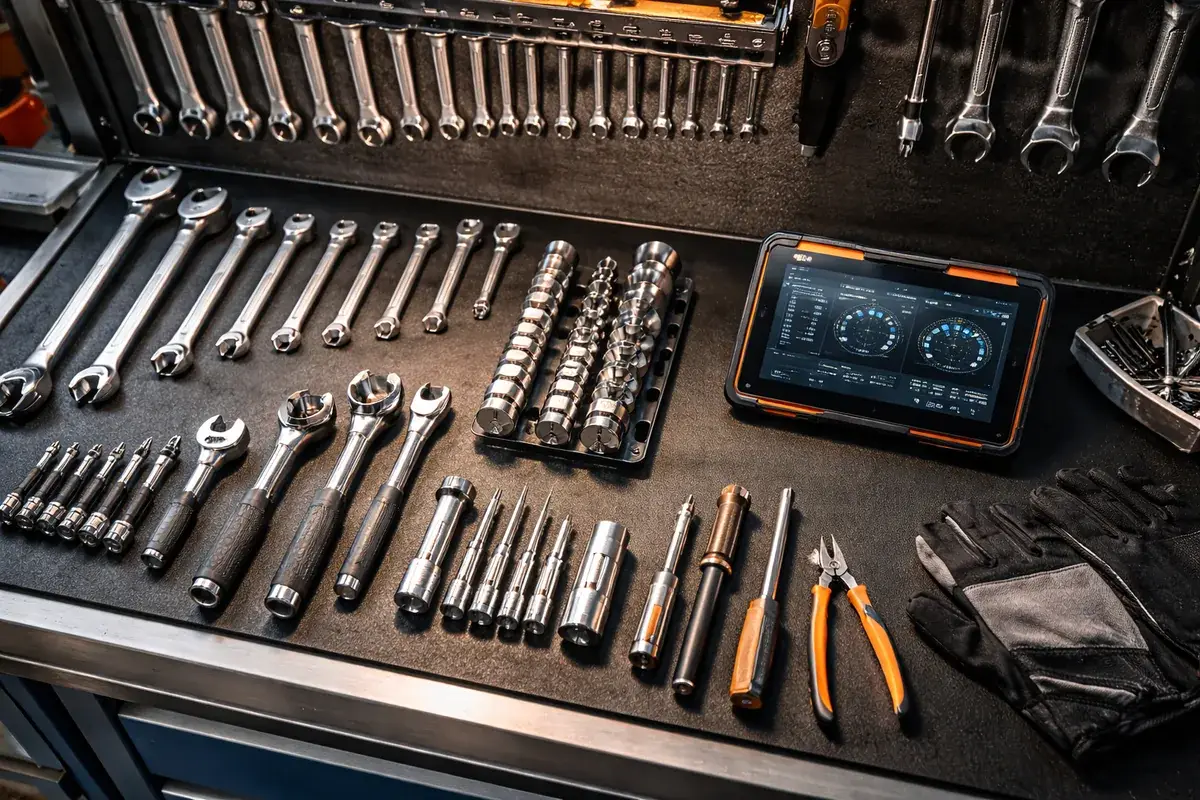
Why the automotive aftermarket is a digital goldmine
The automotive aftermarket — encompassing parts, accessories, maintenance, and repair services — is projected to surpass 00 billion globally by 2027. Yet a striking paradox persists: while dealerships invest heavily in digital campaigns to sell new and used vehicles, the aftermarket service department is often left with outdated marketing playbooks and minimal online visibility.
For dealerships and automotive service providers, this represents an enormous missed opportunity. Service and parts departments typically generate 40–50% of a dealership’s gross profit, yet they receive a fraction of the marketing budget. The brands that close this gap — deploying disciplined digital advertising, search engine optimization, and data-driven customer engagement — will capture disproportionate share in a market that is structurally shifting online.
This article outlines a comprehensive digital strategy for capturing aftermarket service revenue, covering every stage of the customer journey from awareness to retention.
Understanding the aftermarket customer journey
Before allocating budget, it is critical to map how aftermarket customers actually find and choose a service provider. The journey has changed dramatically over the past five years.
The modern service-seeking behavior
| Stage | Customer Action | Digital Touchpoint |
|---|---|---|
| Awareness | Vehicle warning light, unusual noise, or routine maintenance due | Google Search, YouTube how-to videos |
| Consideration | Comparing service providers, reading reviews, checking prices | Google Business Profile, review sites, dealership website |
| Decision | Booking an appointment, requesting a quote | Online booking portal, click-to-call ads, live chat |
| Experience | Receiving service updates, approving additional work | SMS/email notifications, digital vehicle inspection reports |
| Retention | Returning for next service, referring others | Email marketing, loyalty programs, retargeting ads |
The key insight is that over 70%% of service customers begin their journey with a search engine query. Phrases like “brake replacement near me,” “oil change [city name],” and “check engine light diagnosis” represent high-intent moments where a well-positioned dealership can intercept demand that would otherwise flow to independent shops or national chains.
Pillar 1: Search engine optimization for service pages
Most dealership websites treat the service department as an afterthought — a single page with a phone number and a list of services. This is a strategic failure. Every service offering should have its own dedicated, optimized landing page.
Building a service-focused SEO architecture
A robust SEO strategy for automotive aftermarket starts with content depth:
- Dedicated service pages for each offering (oil change, tire rotation, brake service, transmission repair, etc.), each targeting specific long-tail keywords
- Location-specific pages for multi-location operators (e.g., “BMW brake service in London” or “Toyota maintenance in Paris 15e”)
- Educational content hubs covering common vehicle maintenance questions, seasonal preparation guides, and manufacturer-recommended service schedules
- Schema markup (LocalBusiness, AutoRepair, Service) to enhance search result visibility with rich snippets
Content that converts
Service-focused blog articles and FAQ pages serve a dual purpose: they attract organic traffic and they pre-qualify customers. Topics with proven search volume include:
- “How often should I change my brake pads?”
- “Signs your transmission needs service”
- “Winter tire changeover checklist”
- “Difference between OEM and aftermarket parts”
Each piece of content should include a clear call-to-action directing readers to the online booking system or a quote request form. Dealerships that publish at least two service-related articles per month see an average 35%% increase in organic service page traffic within six months.
Pillar 2: paid Search and social advertising
Organic search builds a long-term foundation, but paid advertising delivers immediate, measurable results — especially for time-sensitive service needs.
Google Ads strategy for service revenue
The most effective paid search campaigns for aftermarket services follow three principles:
- Segment campaigns by service type. Group keywords by service category (maintenance, repair, tires, body work) rather than running a single generic “auto service” campaign. This allows precise budget allocation and tailored ad copy.
- Leverage local extensions and call ads. For mobile searchers — who represent the majority of “near me” service queries — call extensions and location extensions dramatically improve conversion rates.
- Deploy Performance Max for local objectives. Google’s AI-driven campaign type can surface your service department across Search, Maps, Display, and YouTube simultaneously, optimizing for booked appointments.
Benchmark data from automotive service campaigns shows cost-per-lead ranging from 5 to 5, with booked appointment rates of 20–30%% from qualified leads.
Paid social for awareness and retargeting
While paid social campaigns may not capture the same bottom-of-funnel intent as search, they excel at two critical functions:
- Awareness campaigns showcasing seasonal promotions (winter tire packages, spring inspection specials, summer road trip checks) to vehicle owners within your service radius
- Retargeting campaigns re-engaging past customers who have not visited in 6+ months, using dynamic creative that references their vehicle make and last service date
Facebook and Instagram remain the most cost-effective platforms for local service advertising, with cost-per-thousand impressions (CPM) typically 40–60%% lower than industry averages when geo-targeting is tightly defined.
Pillar 3: email marketing and customer retention
Acquiring a new service customer costs five to seven times more than retaining an existing one. Yet many dealerships fail to implement systematic email marketing for their service departments.
Building a service-focused email program
An effective aftermarket email program includes:
- Service reminder sequences triggered by mileage intervals or time since last visit (e.g., “Your vehicle is due for its 60,000 km service”)
- Seasonal maintenance campaigns aligned with weather changes and driving conditions
- Recall and safety notifications that position the dealership as a trusted safety partner
- Exclusive service offers for loyalty program members or past customers
- Post-service follow-ups requesting reviews and offering a discount on the next visit
Segmentation is everything
The difference between a 5%% open rate and a 35%% open rate is segmentation. Service email lists should be segmented by:
- Vehicle make, model, and year — enabling hyper-relevant messaging
- Service history — distinguishing between regular customers and lapsed ones
- Service type affinity — customers who consistently purchase tires vs. those who come for mechanical repairs
- Geographic proximity — prioritizing customers within a reasonable drive time
Dealerships with segmented email programs report 3x higher click-through rates and 2.5x more booked appointments compared to batch-and-blast approaches.
Pillar 4: online booking and digital customer experience
A frictionless online booking experience is no longer a competitive advantage — it is table stakes. 68%% of consumers prefer to book automotive services online, and that number rises to 82%% among drivers under 40.
Key features of an effective online booking system
- Real-time availability showing open service bays and estimated completion times
- Transparent pricing with upfront estimates for common services
- Vehicle identification integration (VIN lookup or license plate recognition) to pre-populate vehicle details
- Multi-channel access — bookable from website, Google Business Profile, social media, and email links
- Automated confirmations and reminders via SMS and email to reduce no-show rates
Measuring the digital experience
Implementing proper tracking and reporting is essential to understand which digital channels drive the most valuable service appointments. A well-configured analytics setup should track:
- Source attribution for every booked appointment (organic search, paid search, email, social, direct)
- Revenue per appointment by acquisition channel
- Customer lifetime value segmented by first-touch channel
- Booking abandonment rates and drop-off points in the scheduling flow
Pillar 5: customer data platforms and AI-driven personalization
The most sophisticated automotive service marketers are now leveraging AI-powered solutions to unify customer data and deliver predictive, personalized experiences at scale.
What a customer data platform enables
A CDP consolidates data from your DMS (Dealer Management System), CRM, website analytics, email platform, and advertising accounts into a single customer view. This unified profile enables:
- Predictive service alerts — using vehicle age, mileage patterns, and historical service data to anticipate when a customer will need their next service before they even search for it
- Dynamic ad personalization — serving ads that reference a customer’s specific vehicle and likely upcoming service needs
- Churn risk scoring — identifying customers who are at risk of defecting to a competitor and triggering proactive retention campaigns
- Lifetime value optimization — allocating more marketing spend toward acquiring and retaining high-LTV customer profiles
Practical AI applications for aftermarket marketing
| AI Application | Impact | Implementation Complexity |
|---|---|---|
| Predictive service timing | 25–40%% increase in proactive bookings | Medium |
| Dynamic email content | 15–20%% lift in email engagement | Low |
| Chatbot for service inquiries | 30%% reduction in call center volume | Low–Medium |
| Bid optimization for service ads | 20–35%% improvement in cost-per-booking | Low |
| Review sentiment analysis | Early detection of service quality issues | Medium |
Building your aftermarket digital roadmap
Implementing all five pillars simultaneously is neither practical nor necessary. The recommended sequencing depends on your current digital maturity.
Phase 1: foundation (months 1–3)
- Audit and optimize service landing pages for SEO
- Launch Google Ads campaigns for top three revenue-generating services
- Implement online booking if not already available
- Set up basic tracking and conversion measurement
Phase 2: activation (months 4–6)
- Deploy segmented email marketing sequences
- Launch paid social retargeting for lapsed service customers
- Expand SEO content with educational blog articles
- Integrate service booking with Google Business Profile
Phase 3: optimization (months 7–12)
- Implement a customer data platform or unified data layer
- Deploy AI-driven personalization for email and advertising
- Build predictive models for service timing and churn prevention
- Establish a closed-loop reporting dashboard connecting marketing spend to service revenue
The dealerships and aftermarket service providers that commit to this three-phase approach typically see a 30–50%% increase in digitally sourced service revenue within the first year.
Conclusion: the service department as a digital profit center
The automotive aftermarket is undergoing a structural shift. Customers expect the same digital convenience when booking a brake service as they do when ordering a product online. Dealerships that treat the service department as a digital profit center — investing in SEO, paid media, email marketing, frictionless booking, and data-driven personalization — will not only capture more revenue but also build durable customer relationships that compound over time.
The competitive window is open now. Independent shops and national chains are investing aggressively in digital. Dealerships that delay risk ceding their natural advantage — manufacturer backing, OEM parts, certified technicians — to competitors who simply show up first in the search results.
Ready to build a digital strategy that turns your aftermarket service department into a revenue engine? Contact MyDigipal to discuss how our team in London and Paris can design and execute a data-driven aftermarket growth plan tailored to your business.