Conversational AI transforming auto configurators into virtual advisors
The automotive industry is witnessing a paradigm shift in how customers interact with vehicle configurators. Gone are the days when buyers would spend hours clicking through endless dropdown menus and option lists, often abandoning the process out of frustration or confusion. In 2025 and 2026, conversational AI has emerged as the game-changer that transforms these static tools into dynamic, intelligent virtual advisors.
Here’s a striking statistic: dealerships implementing next-generation AI chatbots in their configurators have seen qualified leads increase by an average of 45%. But this transformation goes far beyond simple automation—it represents a fundamental reimagining of the digital car-buying journey.
The evolution from configuration to conversation
The problem with traditional configurators
Traditional vehicle configurators have long been a necessary evil in automotive digital marketing. While they provide essential functionality, they suffer from several critical limitations:
- Information overload: Customers face hundreds of options without guidance on what matters for their specific needs
- No personalization: Every visitor sees the same interface regardless of their preferences or history
- High abandonment rates: Industry data from 2025 shows that 73% of configuration sessions end without completion
- Lost context: When customers return, they start from scratch with no memory of previous interactions
The result? Dealerships invest heavily in driving traffic to their configurators, only to watch potential buyers disappear into the digital void.
Enter conversational AI
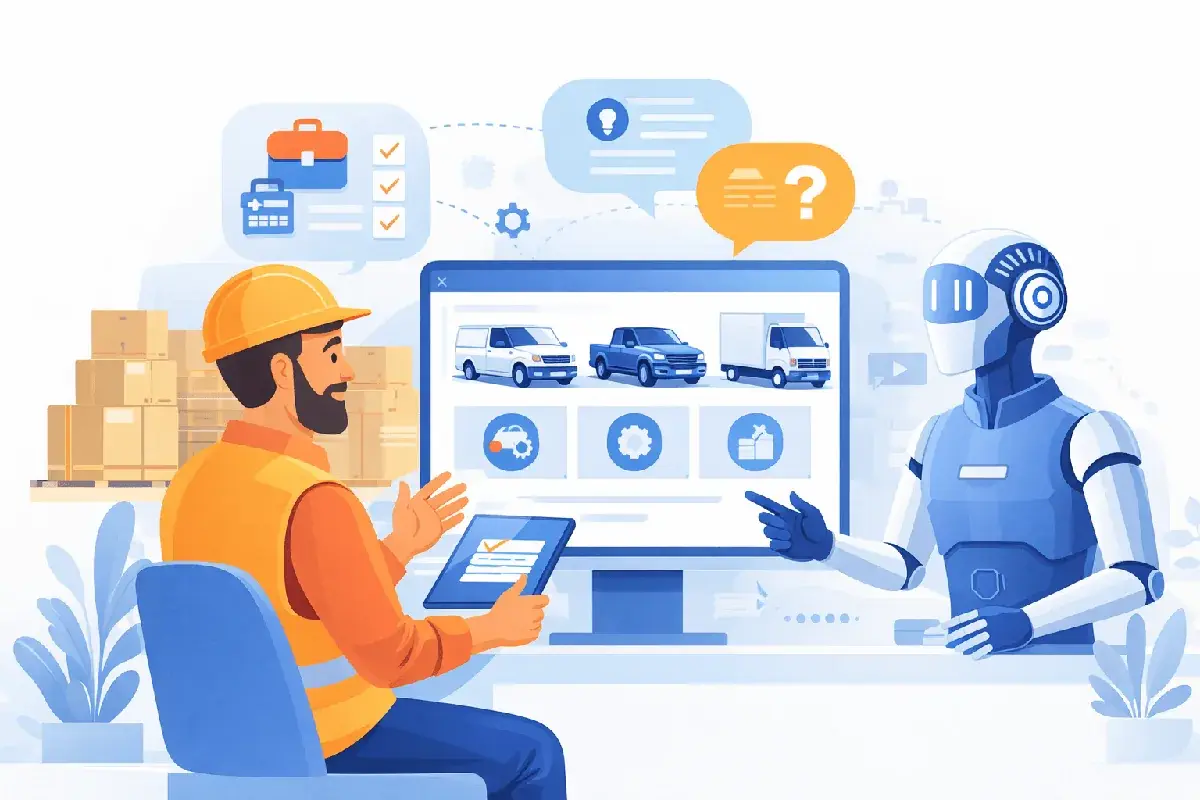
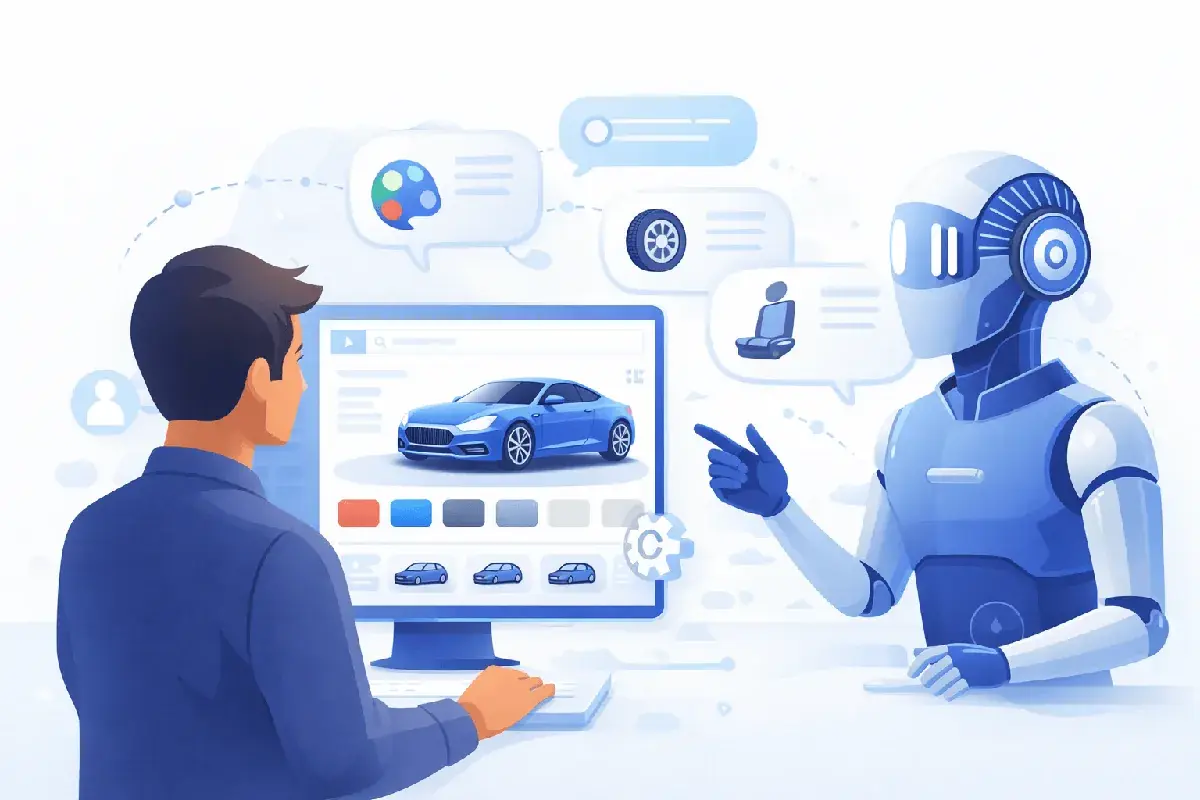
Modern conversational AI transforms this experience entirely. Instead of presenting customers with a complex interface, AI-powered virtual advisors engage in natural dialogue, asking the right questions at the right time and providing tailored recommendations based on real-time behavioral analysis.
Think of it as the difference between wandering through a massive car lot alone versus having an expert advisor who knows exactly what you’re looking for—even before you do.
How next-generation AI chatbots work
Behavioral analysis and prediction
Today’s AI systems don’t just respond to questions—they actively learn from every interaction. When a customer visits a configurator, the AI analyzes:
- Browsing patterns: Which models they’ve viewed, how long they spend on each page
- Historical data: Previous visits, saved configurations, email engagement
- Demographic insights: Location-based preferences, family size indicators, lifestyle markers
- Real-time behavior: Mouse movements, scroll patterns, hesitation points
This data feeds into sophisticated algorithms that predict customer preferences with remarkable accuracy. A customer who has been comparing SUVs and repeatedly checking safety features might be gently guided toward family-oriented packages before they even ask.
Natural language processing advances
The conversational AI of 2026 bears little resemblance to the clunky chatbots of years past. Advanced natural language processing enables:
- Understanding of context and nuance in customer queries
- Recognition of emotional cues and adjustment of tone accordingly
- Seamless handling of complex, multi-part questions
- Support for multiple languages within the same conversation
The hybrid approach: bots and humans working together
Here’s what many businesses miss: the most effective implementations don’t choose between AI and human agents—they combine both strategically. The data is clear: NPS scores for well-implemented AI chatbots now match or exceed those of human agents for routine interactions.
The winning formula involves:
- AI first-line response: Handling common questions, initial qualification, and routine configuration guidance
- Intelligent escalation: Recognizing when a conversation requires human expertise or emotional intelligence
- Seamless handoff: Transferring full context to human agents so customers never repeat themselves
- Human follow-up: Complex negotiations, objection handling, and relationship building
This hybrid model delivers the best of both worlds: 24/7 availability and consistency from AI, with human warmth and expertise when it matters most.
Three case studies: real results in 2025
Case study 1: regional premium dealership network (germany)
A network of 12 BMW and Mercedes dealerships implemented conversational AI across their digital configurators in early 2025.
The Challenge: High-value customers were abandoning configurations at a 78% rate, and the sales team was overwhelmed with unqualified leads.
The Solution: An AI virtual advisor that engaged customers within 30 seconds of landing on the configurator, asked lifestyle-based questions, and provided personalized recommendations.
The Results:
- Qualified lead increase: 52%
- Configuration completion rate: Up from 22% to 61%
- Average time-to-test-drive booking: Reduced by 4 days
- Customer satisfaction score: 4.7/5
The key insight? The AI learned to identify “ready-to-buy” signals and prioritize those conversations for immediate human follow-up.
Case study 2: multi-brand dealership (united states)
A large multi-brand dealership in Texas faced a unique challenge: helping customers navigate between six different automotive brands.
The Challenge: Customers often had brand preferences that didn’t match their actual needs, leading to poor matches and lower satisfaction.
The Solution: A brand-agnostic AI advisor that focused on customer needs first, then recommended appropriate brands and models.
The Results:
- Qualified leads: Up 41%
- Cross-brand discoveries: 34% of customers considered brands they hadn’t initially planned
- Post-purchase satisfaction: Increased by 28%
- Sales team efficiency: Improved by 35% as they received better-qualified prospects
Case study 3: electric vehicle specialist (france)
An EV-focused dealership group faced the challenge of educating customers about electric vehicles while managing configuration complexity.
The Challenge: Many potential EV buyers had misconceptions about range, charging, and total cost of ownership that traditional configurators couldn’t address.
The Solution: A conversational AI that proactively addressed common concerns, calculated personalized range estimates based on stated driving habits, and integrated real-time incentive calculations.
The Results:
- Lead quality improvement: 43%
- Time spent on site: Increased by 156%
- Customer education metrics: 89% reported feeling “well-informed” after interaction
- Conversion to test drive: Up 67%
Implementation best practices
Start with customer journey mapping
Before implementing conversational AI, map your customers’ actual journey through your configurator. Identify:
- Where do customers typically drop off?
- What questions does your sales team repeatedly answer?
- Which configuration options cause the most confusion?
- What information do customers need that isn’t readily available?
This analysis informs how your AI should prioritize its interventions.
Design for conversation, not interrogation
Effective AI advisors feel like helpful conversations, not surveys. Key principles include:
- Progressive disclosure: Ask one question at a time, building on previous answers
- Value exchange: Provide useful information before asking for details
- Personality consistency: Maintain a consistent brand voice throughout
- Graceful fallbacks: When the AI doesn’t understand, it should admit it and offer alternatives
Integrate with your CRM and sales process
Conversational AI delivers maximum value when fully integrated with your existing systems. Ensure your implementation:
- Pushes qualified leads directly to your CRM with full conversation context
- Triggers appropriate follow-up workflows based on customer qualification level
- Provides sales teams with AI-generated briefings before customer contact
- Feeds performance data back into the AI for continuous improvement
For more insights on integrating AI into your automotive marketing stack, explore our automotive digital marketing services.
The future of automotive configuration
As we move through 2026, the convergence of conversational AI with other emerging technologies promises even more sophisticated experiences:
- Augmented reality integration: AI advisors guiding customers through AR vehicle visualizations
- Voice-first experiences: Natural conversations replacing screen-based interactions entirely
- Predictive inventory matching: AI connecting customer preferences with available inventory in real-time
- Emotional intelligence: Systems that detect frustration or excitement and adapt accordingly
Taking the next step
The transformation from static configurator to intelligent virtual advisor isn’t just a technology upgrade—it’s a fundamental shift in how dealerships connect with potential buyers. The 45% increase in qualified leads we’ve documented represents just the beginning of what’s possible.
The dealerships winning in 2026 aren’t those with the most features in their configurators—they’re those who’ve mastered the art of conversation at scale.
Ready to transform your vehicle configurator into an intelligent sales advisor? Contact the MyDigipal team to discover how conversational AI can revolutionize your digital customer experience and drive measurable results for your dealership.
Want to learn more about AI applications in automotive marketing? Explore our automotive digital marketing services or contact our team to discuss your needs.