If you’ve been in B2B marketing for the past few years, you’ve almost certainly heard the pitch: intent data can tell you which accounts are actively shopping for a solution like yours - before they ever fill out a form on your site. Sounds incredible, right?
Well, here’s the thing. Demand Gen Report found that 70% of B2B marketers plan to increase their intent data spending. But only 25% say they’re “very satisfied” with what they’re getting back. That’s a big gap - and it’s worth understanding why it exists before you commit budget.
What is intent data and how does it work?
At its core, intent data tracks the digital breadcrumbs people leave when they research a topic online. Someone at a target company reads three articles about CRM migration in a week? That’s a signal. They download a competitor comparison guide? Another signal.
These signals come from different places, and not all signals are equal:
| Data Type | Source | Signal Strength | Use Case |
|---|---|---|---|
| First-Party | Your website, forms, content | Highest | Lead scoring, personalization |
| Second-Party | Partner data sharing | High | Account identification |
| Third-Party | Content syndication networks | Medium | Topic/account discovery |
| Bidstream | Programmatic ad data | Lower | Broad trend analysis |
Providers like Bombora, 6sense, and G2 pull together billions of these signals every day. Their job is to spot when an account’s research activity spikes above what’s normal for them - what the industry calls “surge” behavior.
The promise vs. the reality
Let’s be honest about both sides.
What you’re told intent data will do
The sales pitch usually goes something like this: you’ll catch buyers early, you’ll skip the noise, you’ll shorten your sales cycle by 25-50%, and your conversions will go through the roof. It paints a picture where intent data basically does the prospecting for you.
What we’ve actually seen
The reality is messier. Data quality swings wildly between providers. Some classify topics so broadly that “interested in cloud computing” could mean anything from a CTO evaluating infrastructure to an intern writing a school paper. Account matching isn’t perfect either - sometimes you’re chasing signals from companies that don’t match your ICP at all.
And then there’s the people problem. We’ve worked with teams that bought expensive intent tools and then… nobody knew what to do with the data. It sat in dashboards. Sales ignored the alerts. Marketing couldn’t figure out how to weave it into campaigns.
That disconnect is exactly why so many companies struggle to see ROI despite writing big checks.
Setting up a successful intent strategy
Picking the right provider matters more than most people think. Not all intent data is the same, and what works for a global enterprise won’t necessarily work for a mid-market SaaS company.
What to look for in a provider
| Criteria | Questions to Ask | Why It Matters |
|---|---|---|
| Geographic Coverage | Do they cover your target markets? | EU/APAC data is often limited |
| Topic Taxonomy | How granular are intent topics? | Broad topics = noise |
| Account Matching | What’s their match rate? | You need 70%+ for serious ABM |
| Data Freshness | How often is data updated? | Weekly minimum, daily preferred |
| Integration | Does it connect to your stack? | CRM/MAP integration is non-negotiable |
How the main platforms compare
Each platform has carved out a niche. Here’s a quick snapshot to help you narrow it down:
| Platform | Strength | Best For | Starting Price |
|---|---|---|---|
| Bombora | Largest cooperative network | Enterprise ABM | $25K/year |
| 6sense | AI-powered predictions | Revenue teams | Custom |
| G2 | High-intent review site data | Software vendors | $15K/year |
| Demandbase | Full ABM platform | Large enterprises | Custom |
| ZoomInfo | Contact + intent combo | Sales teams | $15K/year |
Combining intent with engagement data
Here’s where things get interesting. Intent signals on their own tell you part of the story. But when you layer them on top of what you already know from your own channels, the picture sharpens dramatically.
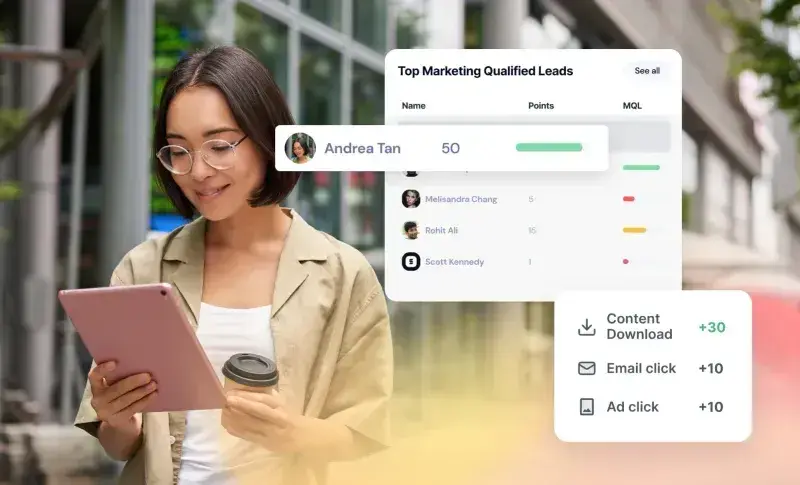
Think about it this way. Your first-party data - website visits, content downloads, paid advertising clicks, email opens, webinar attendance, form fills - tells you how an account is engaging with you specifically. Third-party intent tells you what they’re researching out there in the wider market: reading competitor reviews, consuming industry content, browsing solution categories.
When you bring those two together, you stop guessing. An account that’s surging on “marketing automation” topics AND visiting your pricing page three times? That’s not a maybe. That’s a right-now opportunity.
Platforms like Demandbase and 6sense do a solid job of merging these signals into a unified account score that ABM teams can actually work with.
Building intent-based campaigns
Having the data is step one. Knowing what to do with it is where most teams either succeed or stall out.
A tiered approach works best
Not every intent signal deserves the same response. A company casually browsing your category shouldn’t get the same treatment as one showing a three-times spike in research around your exact solution area.
| Intent Level | Signal | Action | Channel |
|---|---|---|---|
| Surge (High) | 3x+ above baseline | Immediate sales outreach | Direct, phone |
| Active (Medium) | 1.5-3x baseline | Accelerated nurture | Email, retargeting |
| Monitoring (Low) | At baseline | Standard nurture | Display, content |
What a typical intent workflow looks like
In practice, this plays out as a chain reaction. An account trips a surge alert. Your system enriches the account with contact data and firmographics. It routes to the right rep. That rep gets a notification that includes context - what topics the account is researching, how strong the signal is, and suggested talking points. Outreach goes out with messaging that actually references what they care about. Then you track what happens next.
For accounts showing high intent, it’s also smart to layer on Google Ads campaigns targeting their branded and category searches so you’re visible across channels.
The overselling problem
So why does intent data disappoint so often? A few recurring issues keep showing up.
Topic inflation is a big one. Some providers cast such a wide net that normal business research gets flagged as “intent.” When everything looks like a signal, nothing is. You end up with a list of hundreds of “in-market” accounts that aren’t really in-market at all.
Lag time is another silent killer. Many intent feeds run on a weekly batch cycle. By the time you find out an account was researching your category, they might have already booked a demo with a competitor. In B2B, a week can make or break a deal.
Then there’s the account vs. contact problem. Intent data tells you a company is interested. Great. But which person at that company? You still have to figure out who the buyer is, find their contact info, and reach them - which is its own challenge.
Data decay catches people off guard too. Intent signals are perishable. An account that looked red-hot last Tuesday might be completely cold by the time your SDR gets around to calling. Two to three weeks is typically the window before a signal goes stale.
And finally, attribution remains genuinely hard. Proving that a closed deal happened because of an intent signal (rather than, say, the trade show booth or the LinkedIn ad they also saw) requires tracking infrastructure that many teams simply don’t have in place.
Making intent data actually work
Despite the challenges, intent data can deliver real value when you approach it with the right expectations and the right operational setup.
Get the plumbing right first
Before you start building campaigns, make sure the data flows where it needs to go. Push intent signals into Salesforce or HubSpot so reps can see them in context. Connect it to your marketing automation platform to trigger email nurtures when accounts enter or move between intent tiers. Feed high-intent segments to your ad platforms so you’re not wasting impressions on cold accounts. And set up real-time notifications for surge accounts - because timing is everything.
Build playbooks, not just dashboards
The teams that get the most out of intent data are the ones that document exactly what should happen for each scenario. Don’t leave it to interpretation.
| Scenario | Marketing Action | Sales Action |
|---|---|---|
| New surge account | Add to ABM campaign | Research and connect |
| Competitor research | Competitive content campaign | Battle card outreach |
| Category research | Educational nurture | Thought leadership share |
| Your brand intent | Accelerate to demo offer | Direct outreach |
When everyone knows the playbook, execution gets faster and more consistent.
The future: AI-powered intent
The next wave of intent technology is addressing some of these pain points head-on. Machine learning models are getting better at separating real buying signals from noise. Processing times are shrinking from weeks to hours. Some platforms are starting to predict intent at the contact level, not just the account level - which changes the game entirely.
We’re also seeing more automated orchestration, where AI doesn’t just flag an account but actually triggers the right sequence across email, ads, and sales outreach. It’s still early days for a lot of this, but the direction is clear: intent data is becoming faster, more precise, and easier to act on.
Measuring intent data ROI
If you’re investing in intent data, you need to track whether it’s actually moving the needle. Four metrics matter most:
| Metric | Benchmark | Calculation |
|---|---|---|
| Intent-to-MQL Rate | 15-25% | MQLs from intent accounts / total intent accounts |
| Pipeline Influence | 30-40% | Pipeline from intent accounts / total pipeline |
| Sales Cycle Reduction | 20-30% | Avg cycle with intent vs. without |
| Win Rate Lift | 15-25% | Win rate intent accounts vs. non-intent |
If your numbers fall below these benchmarks after a solid quarter of execution, it’s worth revisiting your provider, your topic selection, or how your team is activating the data. Use our marketing calculator to model what better conversion rates could mean for your pipeline.
Getting started: a practical roadmap
Don’t try to boil the ocean. Start with one intent provider and a narrow set of 10-15 tightly relevant topics. Get the integration with your CRM and marketing automation working before you start building campaigns on top of it. Train your sales team - not just on what intent signals mean, but on exactly how to use them in outreach. Then measure rigorously, tracking influenced pipeline and win rates rather than vanity metrics. Iterate based on what you learn, trimming topics that generate noise and doubling down on ones that correlate with real deals.
The companies that get the most from intent data are the ones that treat it as an input to a well-designed process - not a magic bullet.
Want to put intent data to work in your B2B marketing? Get in touch - we can help you identify in-market accounts and build the operational framework to turn those signals into pipeline.