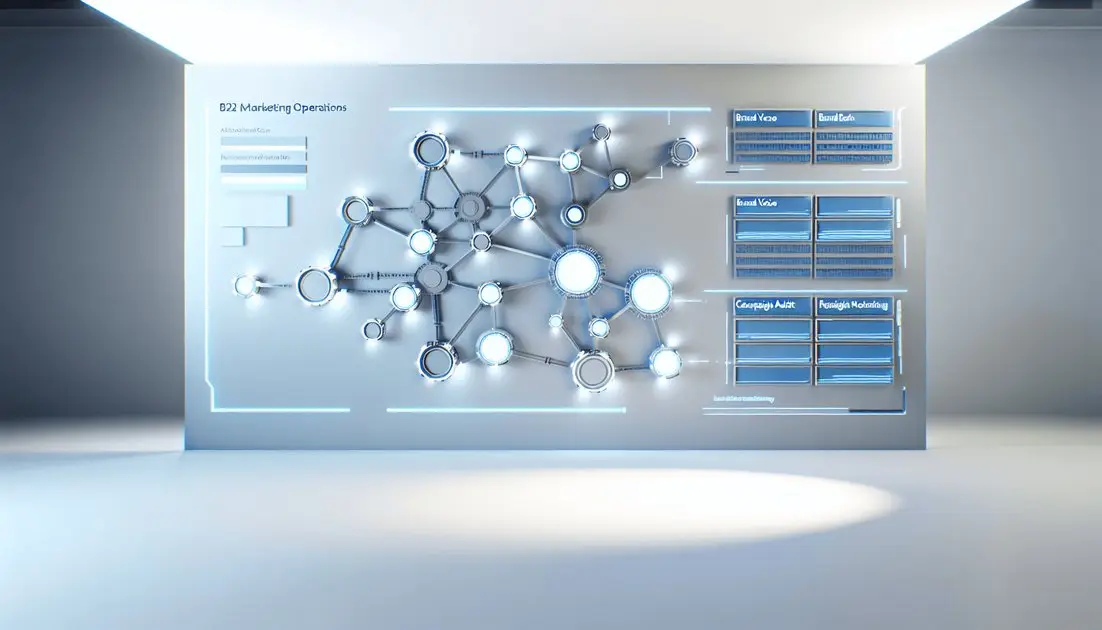
AI Agent Orchestration for B2B Demand Generation: Beyond Automation
The B2B marketing landscape has crossed a critical threshold. While marketing automation dominated the 2010s and early 2020s, 2026 marks the year of AI agent orchestration — a paradigm shift from rule-based workflows to autonomous, goal-driven agents that can research prospects, craft personalized outreach, and qualify leads without human intervention at every step.
According to Salesforce’s 2026 State of Marketing report, 67% of high-performing B2B marketing teams are now deploying multi-agent AI systems for demand generation, compared to just 12% in 2024. The results speak volumes: companies using orchestrated AI agents report 41% higher pipeline velocity and 53% lower cost per qualified lead.
But this is not about replacing marketers. It is about augmenting human creativity with machine speed and precision.
From Automation to Orchestration: Understanding the Shift
The Limitations of Traditional Marketing Automation
Traditional marketing automation follows a simple model: if this, then that. A prospect downloads a whitepaper, they enter a nurture sequence. They visit the pricing page three times, they get flagged as sales-ready. These linear, rule-based workflows served us well, but they have three fundamental limitations:
- Static logic: Rules cannot adapt to novel situations or emerging buyer behaviors
- Single-channel thinking: Each automation operates in its silo — email, ads, social — without holistic awareness
- Human bottleneck: Every new scenario requires a human to create a new workflow, creating a perpetual backlog
What AI Agent Orchestration Actually Means
AI agent orchestration introduces a fundamentally different architecture. Instead of rigid workflows, you deploy specialized AI agents that collaborate toward shared objectives:
| Agent Type | Function | Example Task |
|---|---|---|
| Research Agent | Prospect intelligence gathering | Analyzing a target account’s 10-K filing, tech stack, and recent hiring patterns |
| Content Agent | Personalized content creation | Generating a custom case study brief tailored to the prospect’s industry and pain points |
| Outreach Agent | Multi-channel engagement | Crafting and timing personalized emails, LinkedIn messages, and ad creatives |
| Qualification Agent | Lead scoring and routing | Evaluating engagement signals across channels to determine sales-readiness |
| Analytics Agent | Performance optimization | Continuously analyzing campaign data and adjusting strategies in real-time |
The key difference: these agents communicate with each other, share context, and make autonomous decisions within guardrails set by human strategists. The Research Agent discovers that a prospect just announced a digital transformation initiative; the Content Agent immediately generates relevant messaging; the Outreach Agent selects the optimal channel and timing; the Qualification Agent adjusts the lead score accordingly.
The Architecture of an AI Agent Demand Generation System
Layer 1: The Orchestration Layer
At the center of any multi-agent system sits the orchestration layer — the conductor of the AI symphony. This layer:
- Defines objectives and KPIs (pipeline targets, cost-per-lead thresholds, conversion goals)
- Allocates tasks to specialized agents based on their capabilities and current workload
- Manages inter-agent communication to prevent conflicts and ensure coherent messaging
- Enforces brand guardrails and compliance rules to maintain quality and legal standards
The orchestration layer is where human marketers retain strategic control. You set the goals, define the boundaries, and the agents execute within those parameters.
AI-powered solutions that support multi-agent orchestration are rapidly maturing, with enterprise-grade platforms now offering visual agent workflow builders that require no coding expertise.
Layer 2: The Intelligence Layer
The intelligence layer feeds agents with the data they need to make informed decisions:
- Intent data: Third-party signals from Bombora, G2, and TrustRadius indicating which accounts are actively researching your category
- Technographic data: Current technology stack information that reveals integration opportunities and competitive displacement possibilities
- Behavioral data: First-party engagement signals from your website, emails, and ad interactions via advanced tracking infrastructure
- Firmographic data: Company size, industry, funding stage, and growth trajectory
When these data streams converge, AI agents can make decisions with remarkable accuracy. Research from MIT Sloan in early 2026 found that multi-signal AI agents achieve 78% accuracy in predicting purchase intent, compared to 34% for single-signal models.
Layer 3: The Execution Layer
This is where agents take action across channels:
Content Generation & Personalization
AI-powered content engines now generate personalized assets at scale — from email sequences tailored to each prospect’s industry and role, to custom landing pages that speak to specific pain points identified by the Research Agent. The key advancement in 2026 is contextual coherence: the Content Agent maintains a consistent narrative across all touchpoints, adapting tone and depth based on where the prospect is in their buying journey.
Multi-Channel Activation
Orchestrated agents coordinate outreach across:
- Email campaigns with dynamically personalized content and send-time optimization
- Google Ads with AI-optimized bidding strategies targeting high-intent accounts
- Paid social campaigns with creative variants tailored to account-level insights
- ABM programs that coordinate air cover with direct outreach
The critical advantage: cross-channel awareness. The Outreach Agent knows that Prospect X received an email this morning, so it suppresses the LinkedIn ad and instead serves a display retargeting creative that reinforces the email’s message.
Implementing AI Agent Orchestration: A Practical Framework
Step 1: Define Your Agent Architecture
Start by mapping your demand generation process and identifying where autonomous agents can add the most value. For most B2B organizations, the highest-impact starting points are:
- Account research and enrichment — Agents that continuously monitor target accounts for buying signals
- Content personalization — Agents that adapt messaging based on account intelligence
- Lead qualification — Agents that score and route leads based on multi-signal analysis
Do not attempt to automate everything at once. The most successful implementations start with two to three agents and expand as the system learns and improves.
Step 2: Establish Guardrails and Governance
AI agents are powerful but require clear boundaries:
- Brand voice guidelines: Define tone, terminology, and messaging frameworks that agents must follow
- Approval workflows: Determine which actions require human review versus autonomous execution
- Compliance rules: Ensure agents respect GDPR, CAN-SPAM, CASL, and industry-specific regulations
- Escalation protocols: Define when agents should flag situations for human intervention
Step 3: Build Your Data Foundation
AI agents are only as good as the data they consume. Before deploying agents, ensure you have:
- Clean CRM data: Deduplicated, enriched, and regularly maintained contact and account records
- Unified tracking: Cross-channel behavioral data flowing into a single source of truth
- Intent signal integration: Third-party intent data mapped to your target account list
- Content taxonomy: Organized content library tagged by topic, persona, buying stage, and industry
Step 4: Deploy, Monitor, and Optimize
The deployment phase follows an iterative pattern:
- Week 1-2: Shadow mode — agents generate recommendations but humans execute
- Week 3-4: Supervised autonomy — agents execute low-risk actions, humans review high-impact ones
- Month 2-3: Expanded autonomy — agents handle the majority of execution with human oversight on exceptions
- Month 4+: Full orchestration — agents operate autonomously within established guardrails, with humans focusing on strategy and creative direction
Measuring the Impact: KPIs for AI Agent Orchestration
Traditional marketing metrics still matter, but AI agent orchestration introduces new dimensions of measurement:
| Metric Category | Traditional KPI | AI Agent KPI |
|---|---|---|
| Efficiency | Cost per lead | Cost per qualified opportunity |
| Speed | Campaign launch time | Time-to-first-touch after signal detection |
| Quality | MQL-to-SQL conversion rate | AI-qualified-to-closed-won rate |
| Scale | Campaigns per quarter | Personalized interactions per account per month |
| Intelligence | Open rates, CTRs | Predictive accuracy of intent scoring |
Early adopters are reporting remarkable improvements across these metrics:
- 3.7x increase in personalized touchpoints per target account
- 62% reduction in time from intent signal detection to first outreach
- 45% improvement in MQL-to-SQL conversion rates
- 28% decrease in customer acquisition costs
- 89% of agent-generated content passing human quality review without edits
The Human-Agent Partnership: What Marketers Do in an AI-Orchestrated World
The rise of AI agents does not diminish the role of human marketers — it elevates it. In an orchestrated environment, marketers shift from execution to:
- Strategic architecture: Designing the agent system, defining objectives, and setting guardrails
- Creative direction: Developing the messaging frameworks, brand narratives, and creative concepts that agents execute
- Relationship management: Handling high-value prospect interactions that require emotional intelligence and nuance
- Innovation: Identifying new use cases for AI agents and expanding capabilities
- Quality assurance: Monitoring agent output, providing feedback, and continuously refining agent behavior
The most effective B2B marketing teams in 2026 operate as agent supervisors and strategic architects, not campaign operators.
Common Mistakes to Avoid
1. Over-automating too quickly: Agents need time to learn your market, messaging, and buyer preferences. A phased rollout always outperforms a big-bang deployment.
2. Neglecting data quality: Garbage in, garbage out applies doubly to AI agents. Invest in data hygiene before agent deployment.
3. Ignoring the human touch: Some interactions — particularly late-stage negotiations and executive-level relationships — require human nuance. Design your system to recognize and escalate these moments.
4. Measuring with old metrics: Traditional vanity metrics (opens, clicks) fail to capture the value of AI orchestration. Develop new KPIs that reflect qualified pipeline generation.
5. Treating agents as black boxes: Transparency and explainability are essential. Your team should understand why agents make specific decisions, enabling continuous improvement.
The Future: Where AI Agent Orchestration Is Heading
Looking beyond 2026, several trends are accelerating:
- Agent-to-agent commerce: Your AI agents will soon interact directly with prospects AI procurement agents, creating entirely new B2B engagement dynamics
- Predictive pipeline creation: Agents that identify and engage potential customers before they even begin their buying journey
- Autonomous budget optimization: Agents that dynamically reallocate marketing spend across channels based on real-time performance data
- Self-improving systems: Agent networks that learn from every interaction, continuously improving their effectiveness without human retraining
The organizations that build their AI agent infrastructure today will have a compounding advantage over those that wait.
Transform Your Demand Generation with MyDigipal
At MyDigipal, we help B2B technology companies design, implement, and optimize AI agent orchestration systems for demand generation. Our approach combines AI-powered solutions with deep expertise in ABM strategy, content creation, and performance marketing to build demand engines that scale.
Ready to move beyond automation? Contact our B2B demand generation specialists to explore how AI agent orchestration can transform your pipeline. See our case studies for real-world results from B2B tech companies that have made the leap.